
Choosing the right CNC busbar processing machine is an important decision for manufacturers of switchgear, electrical panels, transformers, and power distribution equipment. The right equipment should do more than punch holes, cut copper bars, or produce accurate bends. It should match your production volume, busbar dimensions, quality requirements, and future automation plans.
For some workshops, a 3-in-1 busbar machine offers a practical combination of flexibility and affordability. For manufacturers handling larger production volumes, dedicated CNC punching and shearing machines, servo bending systems, and automated material handling may provide better workflow efficiency.
This guide explains the main types of busbar processing machines, how to compare their capabilities, and what buyers should evaluate before investing.
What Is a CNC Busbar Processing Machine?
A CNC busbar processing machine is industrial equipment used to process copper and aluminum busbars for electrical applications. Depending on its configuration, it can perform punching, shearing, cutting, bending, and other operations according to programmed dimensions and processing requirements.
These machines are commonly used in:
- Low- and medium-voltage switchgear manufacturing
- Electrical control panel production
- Transformer manufacturing
- Power distribution equipment
- Energy storage and renewable energy systems
- Industrial electrical assembly
CNC control helps manufacturers improve processing consistency, reduce manual measurement, and manage repeated production tasks.
However, not every CNC busbar machine provides the same functions or level of automation. Selecting the correct configuration requires understanding the entire production process.
Types of CNC Busbar Processing Machines
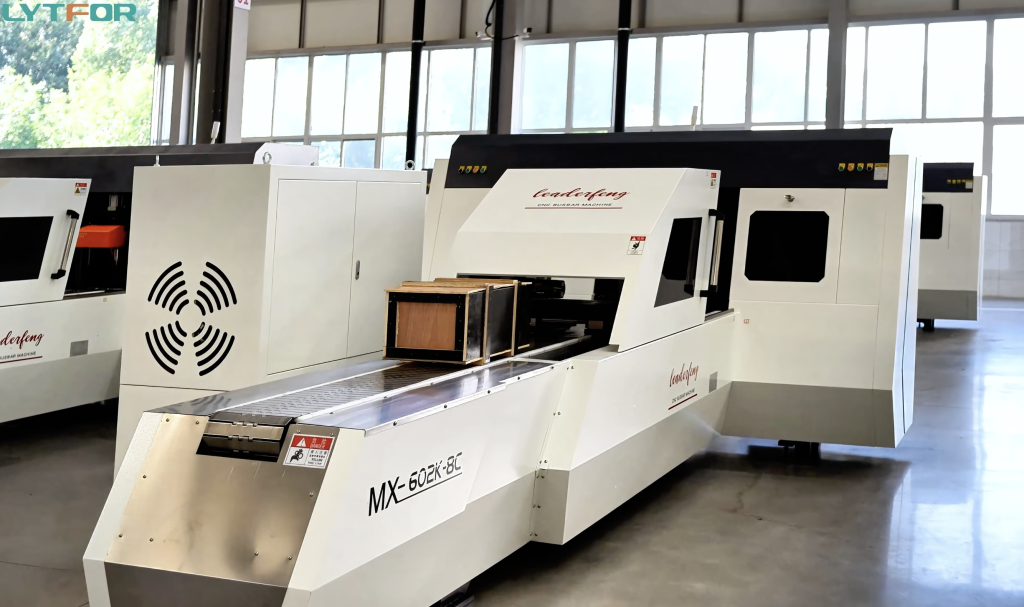
CNC Busbar Punching and Shearing Machine
A CNC busbar punching and shearing machine combines hole punching and length cutting within a dedicated processing system.
Typical applications include:
- Producing busbars with repeated hole patterns
- Cutting copper and aluminum bars to specified lengths
- Processing batches of components for switchgear assemblies
- Manufacturing busbars with multiple hole sizes and positions
For manufacturers with frequent punching and cutting requirements, a dedicated CNC system can reduce manual handling and support repeatable production.
Explore more CNC Busbar Punching and Shearing Machine
CNC Servo Busbar Bending Machine
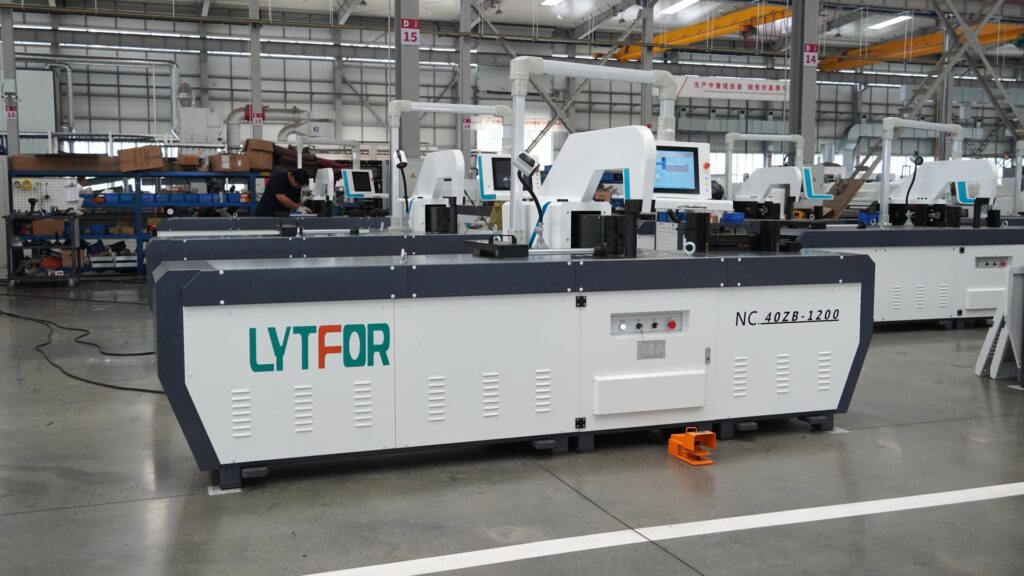
A CNC servo busbar bending machine is designed for controlled bending operations where bend angle, position, and repeatability are important.
Depending on the tooling and machine configuration, applications may include flat bending, vertical bending, offset bending, and other busbar shapes.
When evaluating a bending machine, buyers should consider:
- Maximum busbar width and thickness
- Supported bending types
- Bending angle accuracy and repeatability
- Tooling requirements
- Program storage and changeover
- Compatibility with upstream punching and cutting operations
Explore: CNC Servo Busbar Bending Machine
3-in-1 Busbar Processing Machine
A 3-in-1 busbar processing machine integrates punching, cutting, and bending functions into one equipment platform.
It is often suitable for workshops that process different busbar designs but do not require a fully automated production line.
Its main advantages may include:
- Multiple processing functions within one machine
- Reduced equipment footprint
- Flexible processing for smaller batches
- Lower initial investment compared with some multi-machine production systems
However, an integrated machine is not automatically the fastest option for large-scale production. Actual throughput depends on the machine configuration, operator requirements, setup time, and workflow.
Automated CNC Busbar Production System
For higher-volume manufacturing, a production system combining CNC punching and shearing, servo bending, and automated storage or feeding may offer greater efficiency.
Potential benefits include:
- Reduced manual material handling
- More consistent feeding and positioning
- Improved material flow between operations
- Better production planning
- Opportunities for integration with factory management systems
Automation should be selected according to actual production requirements rather than equipment complexity alone.
Explore more: Automatic Busbar Storage and Feeding System
How to Choose a Busbar Machine Based on Production Volume
Production volume is one of the most important factors in equipment selection, but daily output alone does not determine the best machine.
A factory producing 100 identical busbars may have different equipment requirements from a workshop producing 100 customized busbars with different hole patterns and bends.
| Production Situation | Recommended Configuration | Main Consideration |
|---|---|---|
| Small batches and frequent design changes | 3-in-1 busbar processing machine | Flexibility and investment |
| Repeated punching and cutting operations | CNC punching and shearing machine | Accuracy and throughput |
| Complex bending requirements | CNC servo bending machine | Bending consistency and tooling |
| Continuous production with higher material flow | Dedicated CNC machines with automated feeding | Workflow efficiency and automation |
| Multiple processing operations across production departments | Coordinated CNC processing system | Capacity balancing and material handling |
Before choosing a machine, calculate the required output using actual part drawings, processing sequences, setup time, and operating hours.
A machine’s advertised processing speed does not necessarily represent the output of the complete production line.
Key Technical Specifications Buyers Should Evaluate
Busbar Material, Width, and Thickness
Start with the material and dimensions of the busbars you process.
Important questions include:
- Are the busbars made of copper, aluminum, or both?
- What are the minimum and maximum widths and thicknesses?
- Are the busbars straight, coated, laminated, or otherwise specially prepared?
- Do different product families require different tooling?
Confirm the machine’s supported processing range against your actual drawings. Maximum machine capacity should not be confused with the recommended operating range for every operation.
Punching Accuracy and Hole Layout
For switchgear and electrical panel manufacturers, hole positioning can affect assembly alignment and downstream installation.
Ask the supplier to confirm:
- Hole-position accuracy
- Supported hole shapes and diameters
- Minimum hole-to-edge distance
- Minimum spacing between holes
- Tooling requirements for different hole patterns
- Inspection methods and acceptance criteria
These values may depend on busbar dimensions, tooling, material properties, and processing conditions.
Minimum Finished-Part Length
Maximum cutting capacity is not the only dimensional limitation that matters.
Buyers should also confirm the shortest finished part the machine can produce under the intended processing conditions.
Short busbar components can be particularly important for compact electrical panels and custom power distribution assemblies.
The minimum finished-part length should be verified using the actual part geometry and required operations.
Cutting Accuracy and Edge Quality
Cut-length accuracy and cut-face quality are important for consistent assembly.
Evaluate:
- Cut-length tolerance
- Cut-face perpendicularity
- Burr formation
- Surface scratches or handling marks
- Whether additional finishing is required
Avoid relying on descriptions such as “perfect cutting” or “burr-free” without a documented acceptance standard.
For projects with strict requirements, request sample processing and dimensional inspection before placing an order.
How to Evaluate a Reliable CNC Busbar Machine Manufacturer
Selecting a reliable CNC busbar processing machine involves more than comparing purchase prices or controller brands.
Verify Processing Capability with Real Drawings
Provide the supplier with representative busbar drawings, including the most challenging parts in your production range.
These should cover:
- Maximum and minimum busbar dimensions
- Complex hole patterns
- Short finished parts
- Special bending requirements
- Tight dimensional tolerances
Ask the manufacturer to identify any operations requiring special tooling or additional processes.
Evaluate Control Systems and Repeatability
A CNC control system should support the programming, positioning, and repeatability required by your production process.
Review the available functions, operator interface, program management, fault diagnostics, and maintenance support.
If your factory requires production data integration, confirm the supported interfaces and integration scope rather than assuming all CNC machines offer full Industry 4.0 connectivity.
Request a Factory Acceptance Test
A factory acceptance test can help verify whether the proposed machine meets the agreed requirements.
An effective test should use representative materials and drawings and include inspection of critical dimensions.
Before ordering, agree on the acceptance criteria, test conditions, and responsibility for resolving any deviations.
Compare After-Sales Support
Long-term equipment reliability also depends on the availability of technical support.
Evaluate:
- Installation and commissioning assistance
- Operator training
- Spare parts availability
- Tooling replacement
- Remote troubleshooting
- Warranty scope and service procedures
The most suitable supplier is the one that can demonstrate an appropriate machine configuration and provide clear support arrangements for your factory.
CNC Busbar Machines for Switchgear Manufacturing
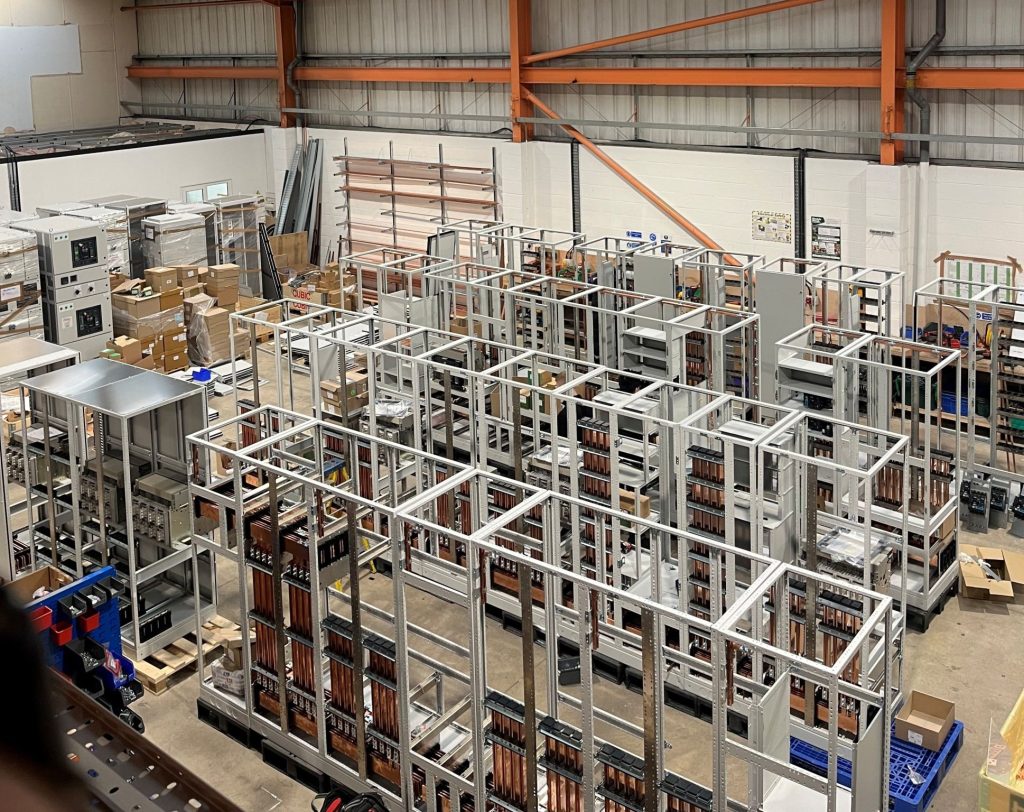
Switchgear manufacturers often process large numbers of copper or aluminum busbars with repeated hole patterns, precise cut lengths, and multiple bending requirements.
A suitable busbar processing system should support:
- Consistent hole positioning for electrical connections
- Repeatable component dimensions
- Efficient processing of different panel designs
- Reduced handling between production steps
- Reliable batch production
For factories with frequent design changes, programming flexibility and tooling changeover are especially important.
For higher-volume switchgear manufacturing, separate CNC punching and shearing machines combined with servo bending and automated material handling may improve overall production flow.
However, the most effective configuration depends on the balance between punching, cutting, bending, and assembly operations.
Learn more about our Busbar Processing Solutions for Switchgear Manufacturing
Material Utilization and Clamping Remnants
Material waste is an important but frequently overlooked factor when evaluating CNC busbar processing equipment.
A machine may provide accurate cutting while still leaving unusable material at the end of the feeding process.
What Is a Clamping Remnant?
A clamping remnant is the portion of a busbar that cannot be processed in a particular feeding or clamping arrangement.
Its length can affect overall material utilization, especially when production involves many short parts.
The actual remnant depends on the machine’s feeding mechanism, clamping system, material dimensions, and processing sequence.
How to Evaluate Material Utilization
When comparing machines, ask suppliers to evaluate the same production drawings and material lengths.
Consider:
- Raw busbar length
- Finished-part dimensions
- Cutting sequence
- Clamping remnant
- Potentially reusable offcuts
- Scrap handling and collection
Material utilization should be assessed using actual production conditions, not only a single advertised scrap figure.
For factories processing high volumes of copper, even modest improvements in material utilization may be commercially significant.
How to Calculate Busbar Material Utilization
Material utilization is an important factor when evaluating the operating cost of a CNC busbar processing machine. A simple way to estimate length-based material utilization is:
Material Utilization (%) = (Total Length of Usable Finished Parts ÷ Original Busbar Length) × 100
For example, if a 6,000 mm copper busbar produces finished parts with a combined length of 5,850 mm, the length-based material utilization rate is:
(5,850 ÷ 6,000) × 100 = 97.5%
The remaining 150 mm may include clamping remnants, cutting losses, and other unusable material.
This is a simplified calculation. Actual material utilization depends on part dimensions, cutting or shearing losses, clamping requirements, production layout, and whether the remaining material can be reused.
CNC Busbar Machine Automation and Industry 4.0 Integration
Automation can improve production efficiency, but its value depends on how well it supports the factory’s workflow.
Before investing in automated storage or feeding, assess:
- Material storage requirements
- Frequency of material changeover
- Production scheduling
- Manual loading and unloading time
- Machine utilization
- Production data requirements
- Compatibility with existing equipment
If ERP or MES integration is required, ask the manufacturer to confirm the available communication interfaces, supported data, and project-specific integration requirements.
A practical automation plan should focus on measurable production bottlenecks rather than automation for its own sake.
Questions to Ask Before Buying a CNC Busbar Processing Machine
Use this checklist when evaluating potential suppliers:
- What copper and aluminum busbar dimensions can the machine process?
- What are the guaranteed punching and cutting tolerances?
- What is the minimum finished-part length?
- What hole-to-edge and hole-spacing limitations apply?
- How much material remains in the clamping system?
- Which operations require special tooling?
- What is the expected throughput using our actual drawings?
- Can the equipment support future automated feeding or production integration?
- What inspection and factory acceptance procedures are available?
- What installation, training, warranty, and spare parts support is included?
A supplier should be able to discuss these questions using the customer’s actual application rather than relying only on general specifications.
Frequently Asked Questions
Which CNC busbar processing machine is best for switchgear manufacturing?
The best configuration depends on production volume, busbar dimensions, hole patterns, bending requirements, and automation needs. Dedicated CNC punching and shearing combined with servo bending may be suitable for higher-volume manufacturing, while a 3-in-1 machine may be practical for flexible, smaller-batch production.
Is a 3-in-1 busbar machine suitable for mass production?
A 3-in-1 machine can support regular production, but it is not automatically the best choice for high-volume operations. Its suitability depends on actual cycle times, operator requirements, part complexity, and production scheduling.
How accurate is a CNC busbar punching and shearing machine?
Accuracy varies by machine configuration and operating conditions. Buyers should request documented hole-position, cut-length, and cut-face tolerances, together with the relevant test methods and acceptance criteria.
How can manufacturers reduce busbar material waste?
Material utilization can be improved through suitable cutting plans, effective material handling, and careful evaluation of clamping remnants and reusable offcuts. The actual savings should be calculated using representative production drawings.
What information should I send when requesting a busbar machine quotation?
Provide busbar material, width, thickness, finished-part drawings, required operations, production volume, accuracy requirements, and any planned automation or factory integration needs.
Conclusion: Choose the Machine That Fits Your Production Process
The right CNC busbar processing machine should match your actual manufacturing requirements—not simply offer the greatest number of functions.
For flexible, smaller-batch production, a 3-in-1 machine may provide a practical solution. For repeated punching and cutting, dedicated CNC equipment can offer a more focused production workflow. For factories planning higher output and greater automation, a coordinated system of CNC punching, shearing, servo bending, and automated feeding may be more appropriate.
Before making a purchase decision, evaluate processing dimensions, dimensional accuracy, material utilization, production flow, and after-sales support.
Send Your Busbar Drawings for Technical Evaluation
Planning to upgrade your busbar production equipment?
Send LYTFOR your busbar drawings, material specifications, required output, and tolerance requirements. Our team can review your application and discuss a suitable machine configuration.
Contact LYTFOR for a Busbar Processing Solution

